

Choosing your wedding dinner style is one of the most important reception decisions you’ll make. While it may seem like a simple catering choice, how your meal is served plays a major role in the flow of the evening, guest experience, and overall atmosphere of your celebration.
At The Hidden Barn, couples commonly choose between plated (sit-down), buffet, or family-style dinner service. Each option offers its own benefits and considerations, and the right choice depends on your vision, guest list, and priorities.
Below, we’ll break down the pros and cons of each dinner style and help you determine which option is best for your wedding day.
Plated (Sit-Down) Wedding Dinners
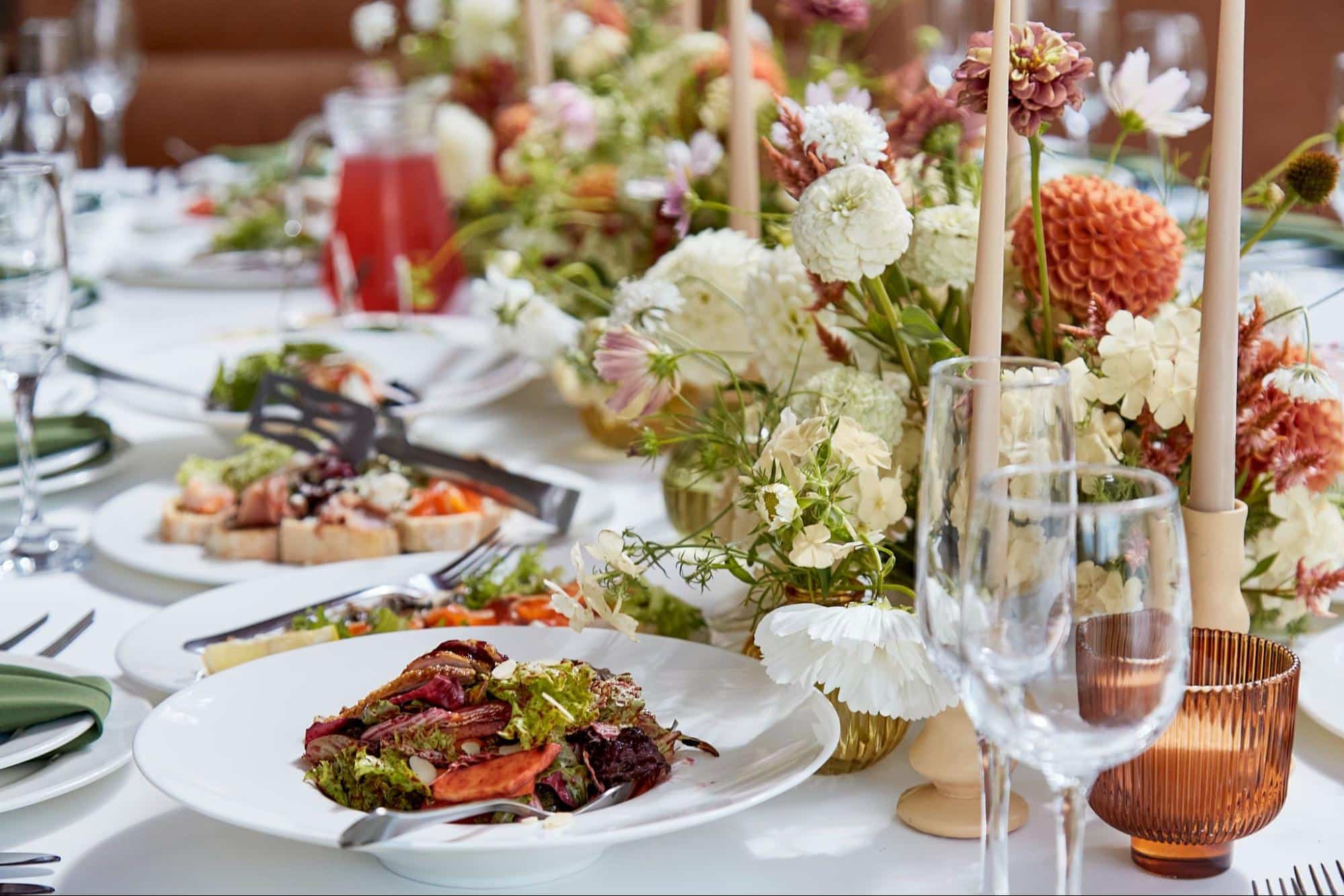
With a plated dinner, guests remain seated while servers deliver each course directly to the table. This style feels classic and polished, and it works especially well when you want dinner to flow in a more structured, intentional way.
Pros
- Creates a formal, elegant atmosphere that pairs well with a classic reception style
- Keeps dinner on a structured timeline since service is coordinated course-by-course
- No buffet lines, which can be more comfortable for guests who prefer to stay seated
- Consistent presentation for every guest, with meals plated and served uniformly
Cons
- Typically higher staffing and catering costs due to the amount of service required
- Requires advance entrée selections and careful tracking for dietary restrictions and seating charts
- Less flexibility if seating changes happen last minute, since meals are often assigned per guest
Best For
Formal weddings, smaller guest counts, and couples who want a polished, traditional reception experience with a predictable flow.
Buffet-Style Wedding Dinners
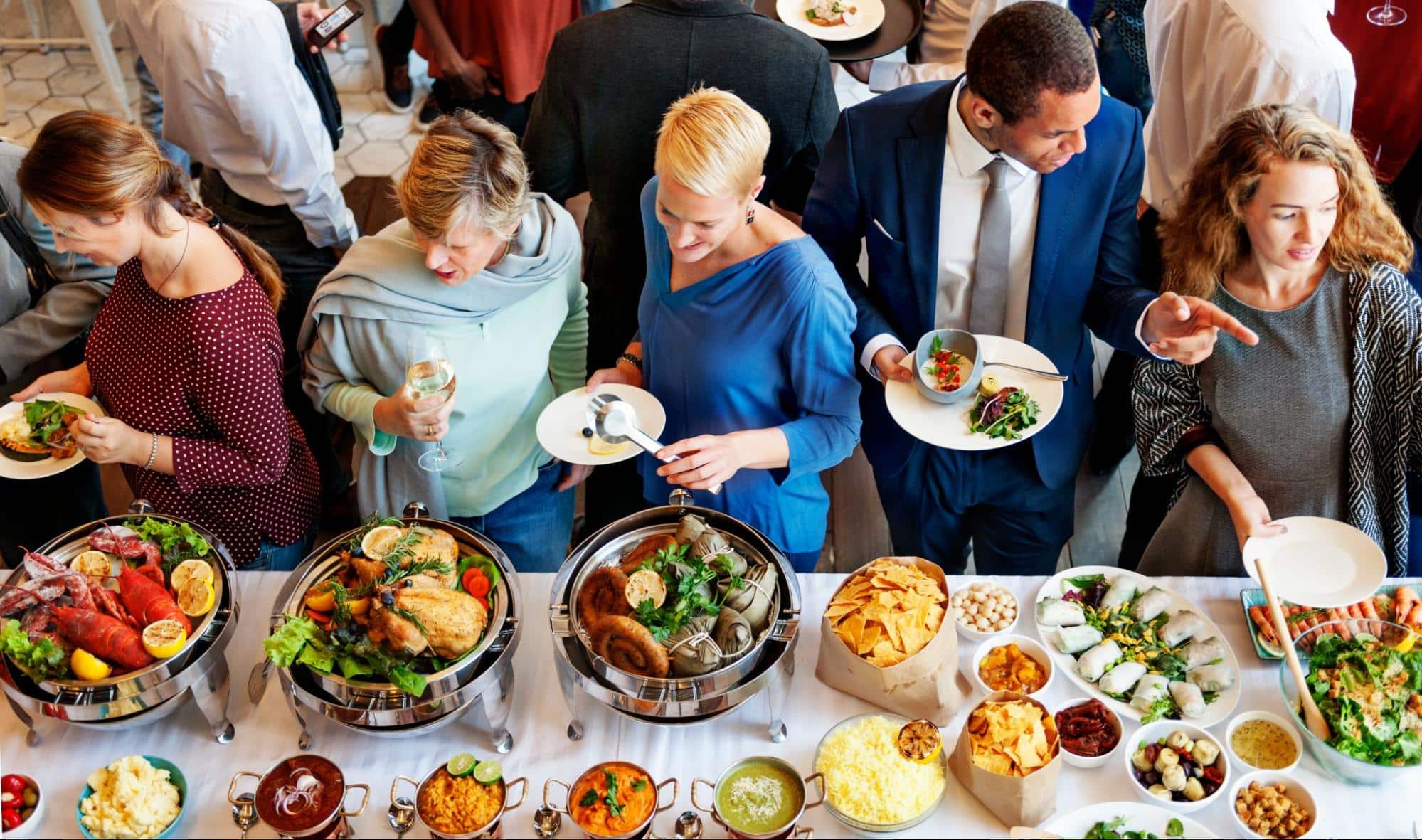
Buffet service allows guests to choose their own meal from a selection of entrees and sides. It’s a flexible option that can feel relaxed and guest-friendly, especially when you want variety and an easygoing dinner experience.
Pros
- Offers variety and flexibility, guests can choose what they want and how much
- Works well for different dietary needs, especially when there are multiple entrée and side options
- Creates a more relaxed and social experience, guests can mingle as dinner begins
- Often more budget-friendly, typically requiring less staffing than plated service
Cons
- Lines can cause slower dinner service if there isn’t a clear plan for releasing tables or multiple lines
- Requires thoughtful layout and guest flow, placement matters to avoid bottlenecks
- Slightly less formal feel than plated service, even though it can still be beautifully presented
Best For
Couples who want flexibility, variety, and a relaxed atmosphere, especially if guest choice and value are top priorities.
Family-Style Wedding Dinners
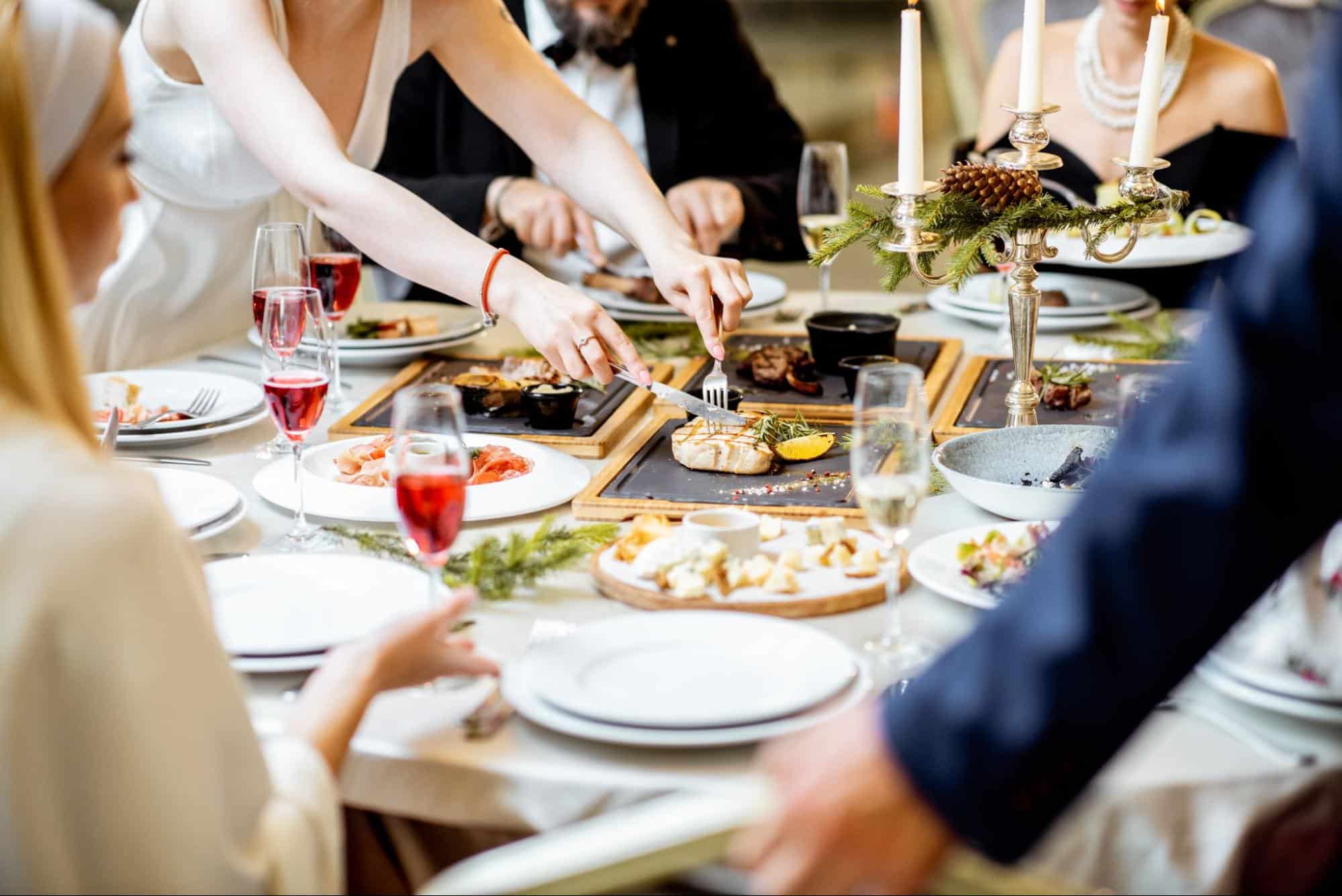
Family-style dinners feature shared platters placed at each table, allowing guests to pass and serve food together. It’s a welcoming option that naturally encourages conversation and creates a “gathered around the table” feeling.
Pros
- Encourages connection and conversation, guests interact more as they share dishes
- No buffet lines, guests stay seated while food is served to the table
- Creates a warm, communal vibe, perfect for couples who want a cozy, inclusive feel
Cons
- Takes up table space, platters need room, which can affect centerpiece size and table design
- Requires coordination for dietary needs, planning is important so every guest has good options
- Less formal than plated service, it feels more intimate and communal than traditional
Best For
Couples who want a cozy, community-focused dining experience that feels warm, interactive, and guest-centered.
How to Choose the Right Wedding Dinner Style
When deciding how to serve dinner at your wedding, consider the following factors.
Your Overall Wedding Style
Formal weddings tend to pair naturally with plated dinners, while relaxed or rustic celebrations often feel more cohesive with buffet or family-style service. Your dinner style should complement the look and feel of the entire day.
Guest Count and Timeline
Large guest lists and tight timelines benefit from structured planning. Plated service offers predictability, while buffets may require multiple lines or stations to keep things moving efficiently.
Your Guests’ Comfort
Consider your guests’ needs and preferences. Some guests appreciate staying seated, while others enjoy choosing their own meal. Thinking about accessibility and ease can help guide your decision.
Budget Considerations
Buffet service is often the most cost-effective option, while plated dinners typically involve higher staffing costs. Understanding what’s included in your venue and catering packages can help you plan accordingly.
Find the Wedding Dinner Style That Feels Right
There is no single “right” way to serve dinner at your wedding. The best choice is the one that fits your vision, supports your timeline, and creates a great experience for your guests.
At The Hidden Barn, our goal is to help couples plan a celebration that feels seamless and personal from start to finish. If you have questions about dinner service options, catering packages, or available upgrades, our team is always happy to help you explore what works best for your wedding day.

